
Coconut oil or MCT oil: what is the difference?
Coconut oil and MCT oil are often mentioned in the same breath. MCT oil is usually even made from coconut oil. Yet they are two different products, with a different composition, taste and use. In this article you will learn how they differ, how your body processes these fats and what each oil is best used for.
What are MCTs?
MCT stands for medium-chain triglycerides: fats with fatty acid chains of 6 to 12 carbon atoms. Most fats in our diet, such as those in meat, olive oil and nuts, have long chains of 14 or more carbon atoms (LCTs). The main medium-chain fatty acids are:
- C6 (caproic acid), present only in small amounts;
- C8 (caprylic acid);
- C10 (capric acid);
- C12 (lauric acid), which behaves partly like a medium-chain and partly like a long-chain fatty acid.
Medium-chain fatty acids are processed differently from long-chain ones. They are absorbed faster and travel via the portal vein straight to the liver, where they are quickly used for energy or converted into ketones. Long-chain fatty acids first enter the blood via the lymphatic system.
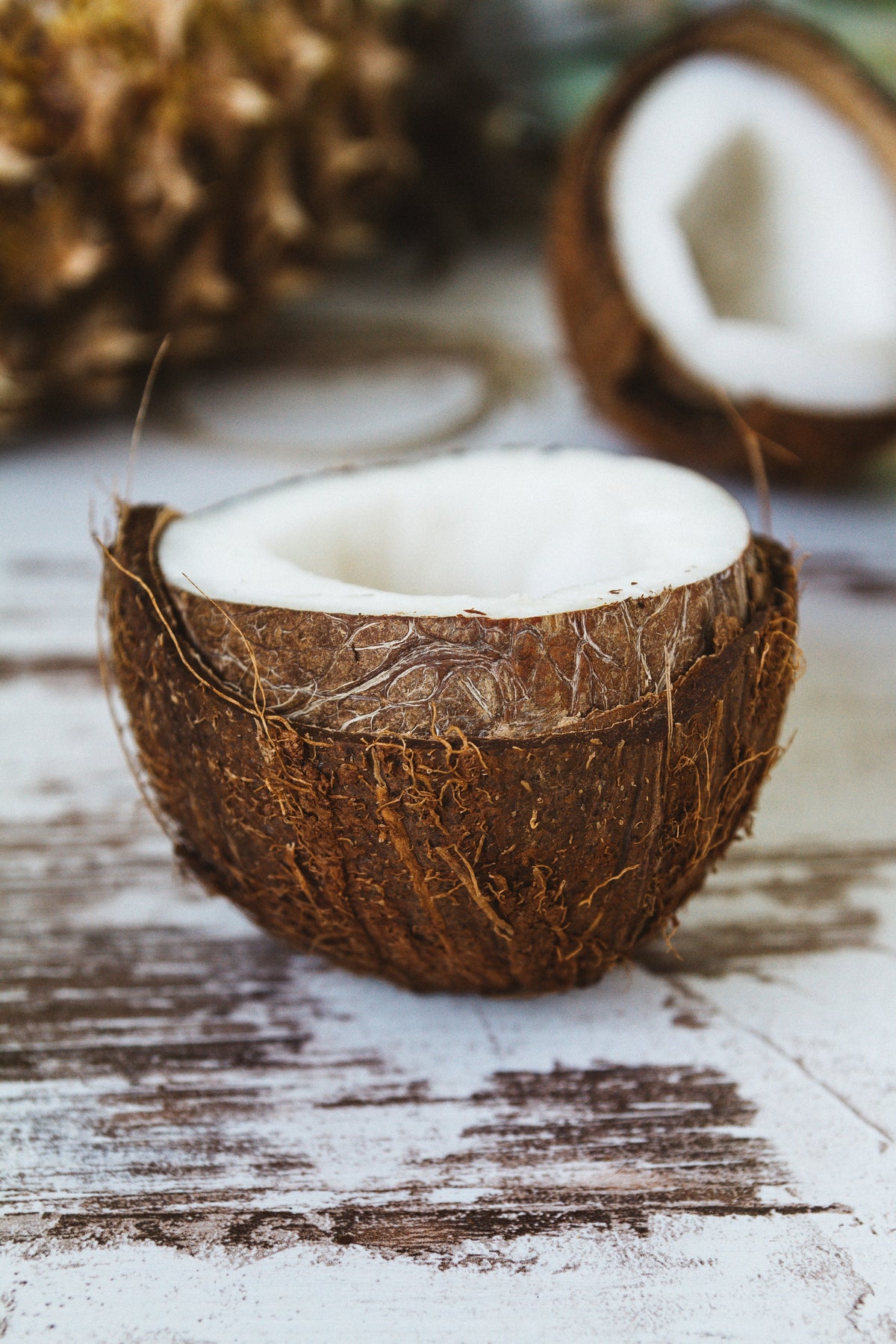
Coconut oil
Coconut oil is pressed from the flesh of the coconut. It is about 85 to 90 percent saturated fat. Most of that is lauric acid (C12, about 45 to 50 percent). The C8 and C10 content is relatively small: together about 12 to 15 percent. Coconut oil also contains myristic acid and palmitic acid, among others.
Coconut oil is solid below about 24 °C and melts into a clear oil above that. Virgin coconut oil has a distinct coconut taste; refined coconut oil is tasteless and better suited to high temperatures.
MCT oil
MCT oil is made by extracting the medium-chain fatty acids from coconut or palm kernel oil. It usually contains mainly C8 and C10, and sometimes only C8. Lauric acid is usually absent or present in only small amounts. MCT oil is liquid at room temperature, colourless and practically tasteless.
The differences at a glance
| Coconut oil | MCT oil | |
|---|---|---|
| Origin | Pressed from coconut | Fractionated from coconut or palm kernel oil |
| Main fatty acids | Lauric acid (C12), plus small amounts of C8 and C10 | Mainly C8 and C10 |
| At room temperature | Solid (below approx. 24 °C) | Liquid |
| Taste | Coconut (virgin) or neutral (refined) | Neutral |
| Smoke point (indicative) | Approx. 175 °C (virgin) to 230 °C (refined) | Approx. 160 °C |
| Suitable for cooking | Yes (refined also at higher temperatures) | No, better used cold |
| Conversion to ketones | Limited | Stronger, especially C8 |
What do you use coconut oil for?
- For frying and roasting, especially refined coconut oil.
- In curries, stews and Asian dishes, where the coconut flavour fits.
What do you use MCT oil for?
- In coffee or tea, for example combined with butter or ghee and a scoop of collagen.
- In smoothies, salads and dressings.
- On a ketogenic diet, as MCTs, and especially C8, are converted into ketones relatively quickly.
MCT oil is less suitable for cooking because its smoke point is relatively low. For frying and roasting, choose a stable fat such as beef tallow, ghee or refined coconut oil.
Start slowly with MCT oil
A large amount of MCT oil at once can cause digestive complaints such as cramps or diarrhoea. So start with a teaspoon a day and build up slowly to one or two tablespoons, spread over the day. Preferably take it with food or in coffee rather than on an empty stomach.
MCT coffee with collagen
A popular way to use MCT oil is in a creamy coffee. Here is how to make it:
- Brew a cup of coffee.
- Add a teaspoon to a tablespoon of MCT oil, optionally with a knob of butter or ghee.
- Add a scoop of collagen hydrolysate. It dissolves in hot drinks and has a neutral taste.
- Blend everything for a few seconds with a stick blender or milk frother until creamy.
Find more ideas in our article start your day with collagen coffee.
Coconut oil, MCT and saturated fat
Both coconut oil and MCT oil consist almost entirely of saturated fat. Health organisations advise limiting saturated fat. MCTs are processed differently in the body from long-chain fats, but that does not mean you can use them without limit. See them as an addition within a varied diet.
Frequently asked questions
Is MCT oil the same as coconut oil?
No. MCT oil is often made from coconut oil, but it contains only the medium-chain fatty acids, mainly C8 and C10. Coconut oil consists mostly of lauric acid (C12) and also contains long-chain fatty acids.
Can you cook with MCT oil?
Better not. MCT oil has a low smoke point of about 160 °C. Use it cold or in hot drinks, and cook with tallow, ghee or butter instead.
Does coconut oil fit a carnivore or paleo diet?
Coconut oil fits well within a paleo diet: it is an unprocessed fat that has been used in tropical cuisines for centuries. On a strict carnivore diet, which only includes animal foods, many people choose animal fats such as tallow, butter or ghee instead.
How much MCT oil per day?
Start with a teaspoon and build up to a maximum of one or two tablespoons per day, spread over the day. Pay attention to how your digestion responds.
Our view
Coconut oil and MCT oil are handy fats, but they are still plant products from the tropics. In our own kitchen, animal fat comes first: tallow for frying and roasting, butter and ghee for flavour. We use MCT oil at most as an extra in coffee, together with butter and a scoop of collagen. If you truly eat carnivore, you don't need coconut at all.
In summary
Coconut oil and MCT oil both come from the coconut, but they are different products. Coconut oil consists mainly of lauric acid, is solid at room temperature and suitable for cooking. MCT oil contains mainly C8 and C10, is liquid and tasteless and is converted into energy and ketones more quickly. If you use them, put coconut oil in the pan and MCT oil in your coffee. But our first choice of fat remains animal: tallow, butter and ghee.
Sources
- U.S. Department of Agriculture. FoodData Central: oil, coconut.
- Bach AC, Babayan VK. Medium-chain triglycerides: an update. American Journal of Clinical Nutrition. 1982;36(5):950–962.
- Vandenberghe C, et al. Tricaprylin alone increases plasma ketone response more than coconut oil or other medium-chain triglycerides. Current Developments in Nutrition. 2017;1(4):e000257.


Read more

Eggs are a real powerhouse! And most of the good properties are mainly in the yolk, but unfortunately many people still think too negatively about yolks. Resistance to yolks For decades, egg c...
Read more
Organ meat: nature's multivitamin
Why swallow a pill full of isolated, synthetic vitamins when nature made one long ago? Organ meat is sometimes called nature's multivitamin. There is good reason for that: liver, kidney, heart and ...
Read more