

Collagen type 1, 2 and 3: what is the difference?
Collagen products often say “type I & III” or “type II” on the label. But what does that actually mean, and does it matter which type you choose? In this article you will learn which collagen types exist, where they are found in your body, which foods provide them and what to look for when choosing a collagen supplement.
What is collagen?
Collagen is the most abundant protein in mammals: roughly a quarter to a third of all protein in the body is collagen. It is the main structural protein of connective tissue and is found in skin, bones, tendons, cartilage and blood vessels, among other places.
A collagen molecule consists of three protein chains twisted around each other like a rope: the so-called triple helix. These chains follow a repeating pattern: glycine, followed by two other amino acids, often proline and hydroxyproline. That is why about one third of collagen is glycine, and why it contains far more proline and hydroxyproline than most other proteins.
How many types of collagen are there?
Scientists have described 28 different collagen types. They are numbered with Roman numerals (type I, II, III and so on) in the order in which they were discovered. The types differ in the make-up of their protein chains and in the structures they form: long fibres, networks or connections between other fibres. Five types are the most common:
| Type | Where in the body | Key feature |
|---|---|---|
| I | Skin, bones, tendons, ligaments, teeth, cornea | By far the most common: about 90% of all collagen |
| II | Cartilage, vitreous body of the eye | Main component of cartilage |
| III | Skin, blood vessels, intestinal wall, organs | Usually found together with type I |
| IV | Basement membranes (for example in the kidneys) | Forms a network instead of fibres |
| V | Skin, bones, cornea, placenta | Works together with type I |
Type I: building material for skin, bones and tendons
Type I is the collagen people talk about most, and for good reason: it makes up about 90% of all collagen in your body. It forms strong, long fibres that can withstand pulling forces. You find it in the dermis, in bones (where it provides strength together with minerals), in tendons and ligaments and in the cornea of the eye.
In food, type I is mainly found in skin, fish skin and cuts of meat rich in connective tissue. Collagen supplements made from bovine hide and from fish consist largely of type I.
Type II: the collagen of cartilage
Type II is the main collagen in cartilage, such as the cartilage that covers the surfaces of your joints. It is also found in the vitreous body of the eye. In food, you find type II in cartilage-rich parts, such as the cartilage at the ends of bones and chicken sternum. Bone broth that has been simmered for a long time from bones with cartilage therefore also contains collagen from cartilage.
There are also supplements with so-called undenatured type II collagen. That is a different product from collagen hydrolysate: it is dosed in milligrams rather than grams, and its original structure is deliberately kept intact.
Type III: the partner of type I
Type III usually occurs together with type I, especially in tissues that need to stretch: the skin, the walls of blood vessels, the intestinal wall and organs such as the liver. It forms finer fibres than type I. Bovine collagen made from hide contains type III as well as type I.
Types IV and V
Type IV does not form fibres but a kind of mesh network. It is the main component of basement membranes: the thin layers on which the cells of skin, blood vessels and organs rest, for example in the filters of the kidneys. Type V occurs in smaller amounts together with type I, including in skin, bones, the cornea and the placenta. It helps determine how thick collagen fibres become.
Which collagen types are in food and supplements?
In traditional diets, people got collagen from skin, tendons, cartilage, marrow and bone broth. Today we mostly eat muscle meat, which contains relatively little collagen. If you want to add collagen-rich foods, these are roughly your options:
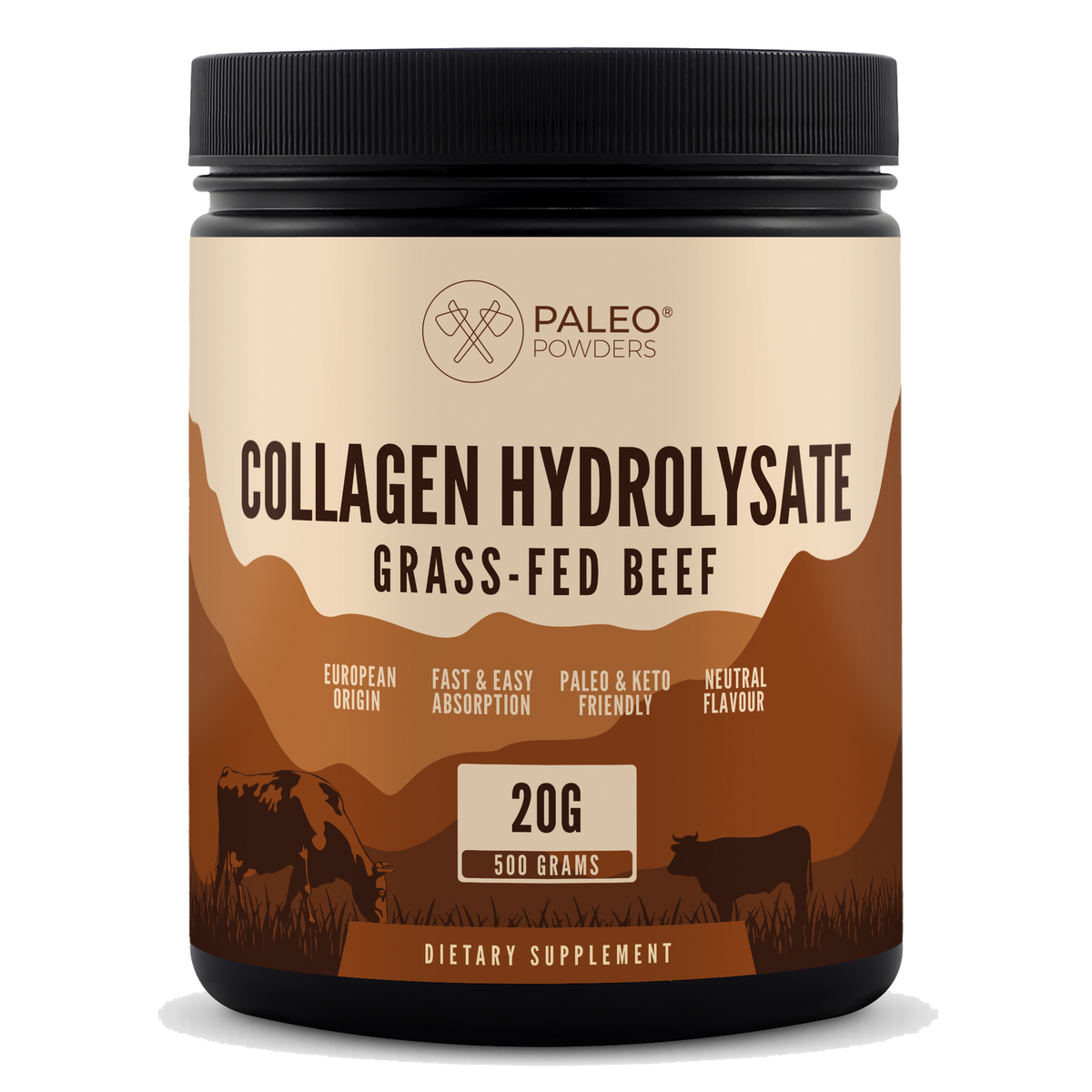
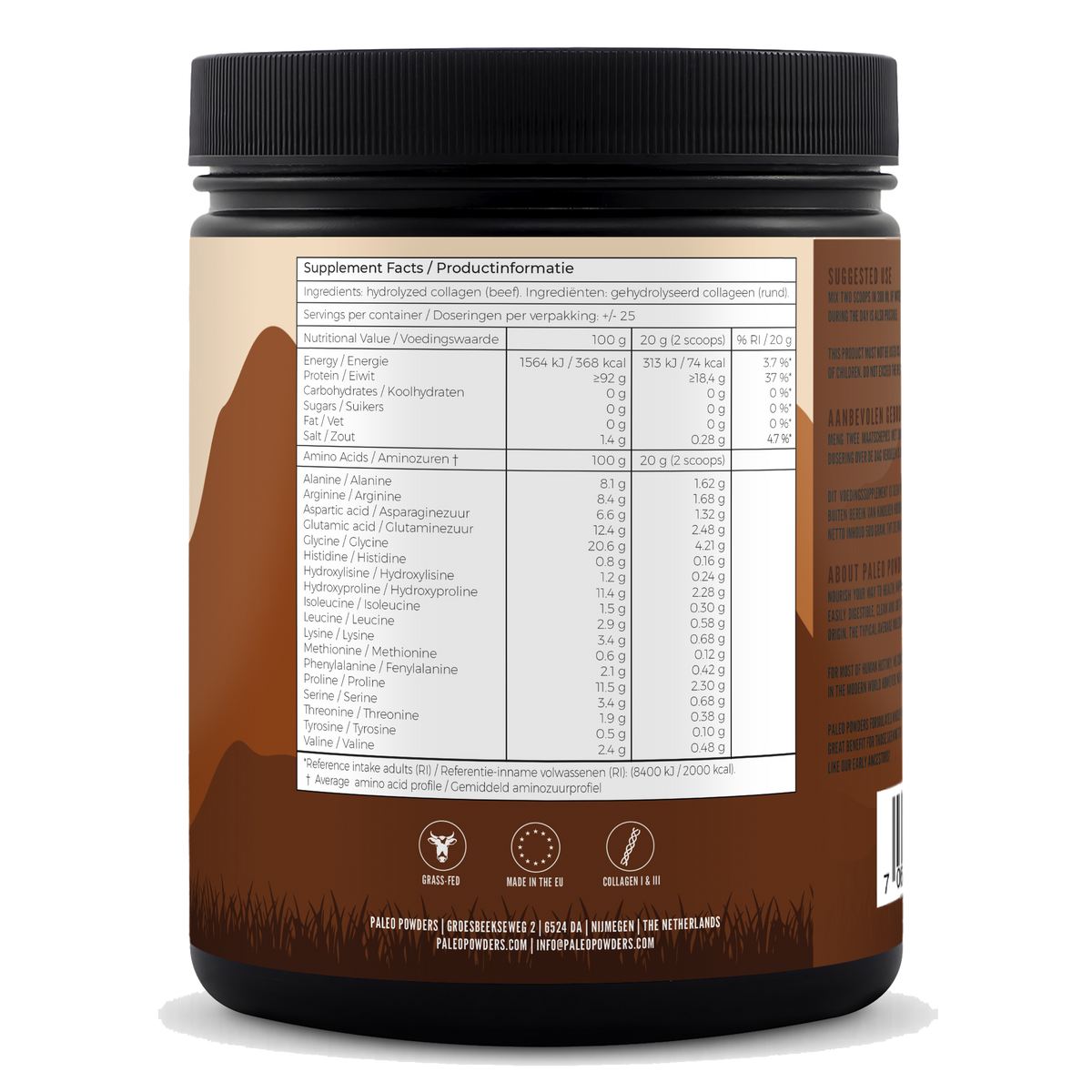
- Bovine collagen (hydrolysate): made from bovine hide; mainly type I and III. For example our collagen hydrolysate from grass-fed European cattle.
- Fish collagen (marine collagen): made from fish skin; mainly type I. For example our collagen hydrolysate from wild-caught sea fish.
- Bone broth: simmered from bones, cartilage and connective tissue. Cooking turns the collagen into gelatin, and it contains a mix of types. See our bone broth from grass-fed cattle.
- Chicken cartilage: mainly type II.
Does the type matter for collagen hydrolysate?
In collagen hydrolysate (also called collagen peptides), the long protein chains have been cut into small pieces using enzymes. The triple helix no longer exists. The “type” on the label therefore mainly tells you about the raw material: which tissue the collagen comes from. The amino acid composition of types I, II and III is very similar: all three are rich in glycine, proline and hydroxyproline.
Your body breaks down dietary collagen into amino acids and small peptides and absorbs them. After consuming collagen hydrolysate, peptides such as prolyl-hydroxyproline have been detected in the blood. Your body then makes the collagen it needs itself, with the types that belong in each location.
In practice, there are still differences between sources. Fish collagen often has a low molecular weight (below 3 kDa in our product) and suits people who do not eat beef. Bovine collagen is a logical choice if you are allergic to fish. Bone broth provides other substances from bone and cartilage besides collagen, but has a savoury taste. Read more in beef versus fish collagen and in the difference between bone broth and collagen hydrolysate.
Vitamin C and collagen
Your body needs vitamin C to make collagen. Vitamin C contributes to normal collagen formation for the normal function of blood vessels, bones, cartilage, gums, skin and teeth. Vitamin C is mainly found in fruit and vegetables such as bell peppers, kiwi and berries. Among animal sources, fresh spleen in particular contains a substantial amount. Because vitamin C does not handle heat well, it is best to cook organ meats only briefly.
How do you use collagen hydrolysate?
- Studies often use amounts of 2.5 to 10 grams per day. Follow the recommended dose on the label.
- Hydrolysate dissolves in cold and hot drinks, such as coffee, tea, smoothies and yoghurt. Unlike gelatin, it does not gel.
- Collagen is a protein, but not a complete one: it lacks the essential amino acid tryptophan. So see it as an addition to a varied, protein-rich diet rather than a replacement.
Frequently asked questions
Which type of collagen is in the skin?
The skin mainly contains type I and type III, with smaller amounts of other types such as type IV in the basement membrane and type V.
Is fish collagen type 1?
Yes, collagen from fish skin consists largely of type I.
Can I combine different collagen types?
Yes. For example, you can add collagen hydrolysate to your coffee and also drink bone broth. Just keep an eye on your total protein intake.
Is collagen vegan?
No. Collagen only occurs in animals. Plant-based “collagen boosters” do not contain collagen, but for example vitamin C or individual amino acids.
Our view
Collagen is the protein most missing from the modern Western kitchen. We eat the steak and the chicken breast, but leave the skin, tendons, cartilage and bones: exactly the parts that contain collagen. Our ancestors ate the whole animal and made broth from the bones. That is where we want to go back to. Eat chicken skin and pork rind, make your own broth, or use our bone broth or a scoop of collagen. Nose to tail, protein included.
In summary
There are 28 collagen types, but types I, II and III matter most for food and supplements. You find types I and III mainly in bovine collagen, type I in fish collagen and type II in cartilage. Because collagen is broken down during digestion, the source (beef, fish or bone broth) and the quality of the product matter more in practice than the type number on the jar.
Sources
- Ricard-Blum S. The collagen family. Cold Spring Harbor Perspectives in Biology. 2011;3(1):a004978.
- Shoulders MD, Raines RT. Collagen structure and stability. Annual Review of Biochemistry. 2009;78:929–958.
- Iwai K, et al. Identification of food-derived collagen peptides in human blood after oral ingestion of gelatin hydrolysates. Journal of Agricultural and Food Chemistry. 2005;53(16):6531–6536.
- European Commission. EU Register of nutrition and health claims (vitamin C).


Read more

The difference between Bone Broth and Collagen Hydrolysate
Bone Broth and Collagen hydrolysate are ideal for anyone looking to support the health of their skin, hair, nails, joints, ligaments, tendons and intestines. What is the difference between these pr...
Read more
Gelatin or collagen hydrolysate: what is the difference?
Gelatin and collagen hydrolysate are closely related: both come from collagen, they contain the same amino acids and both are neutral in taste and smell. Yet they behave very differently in the kit...
Read more