

Collagen Hydrolysate

Collagen Hydrolysate
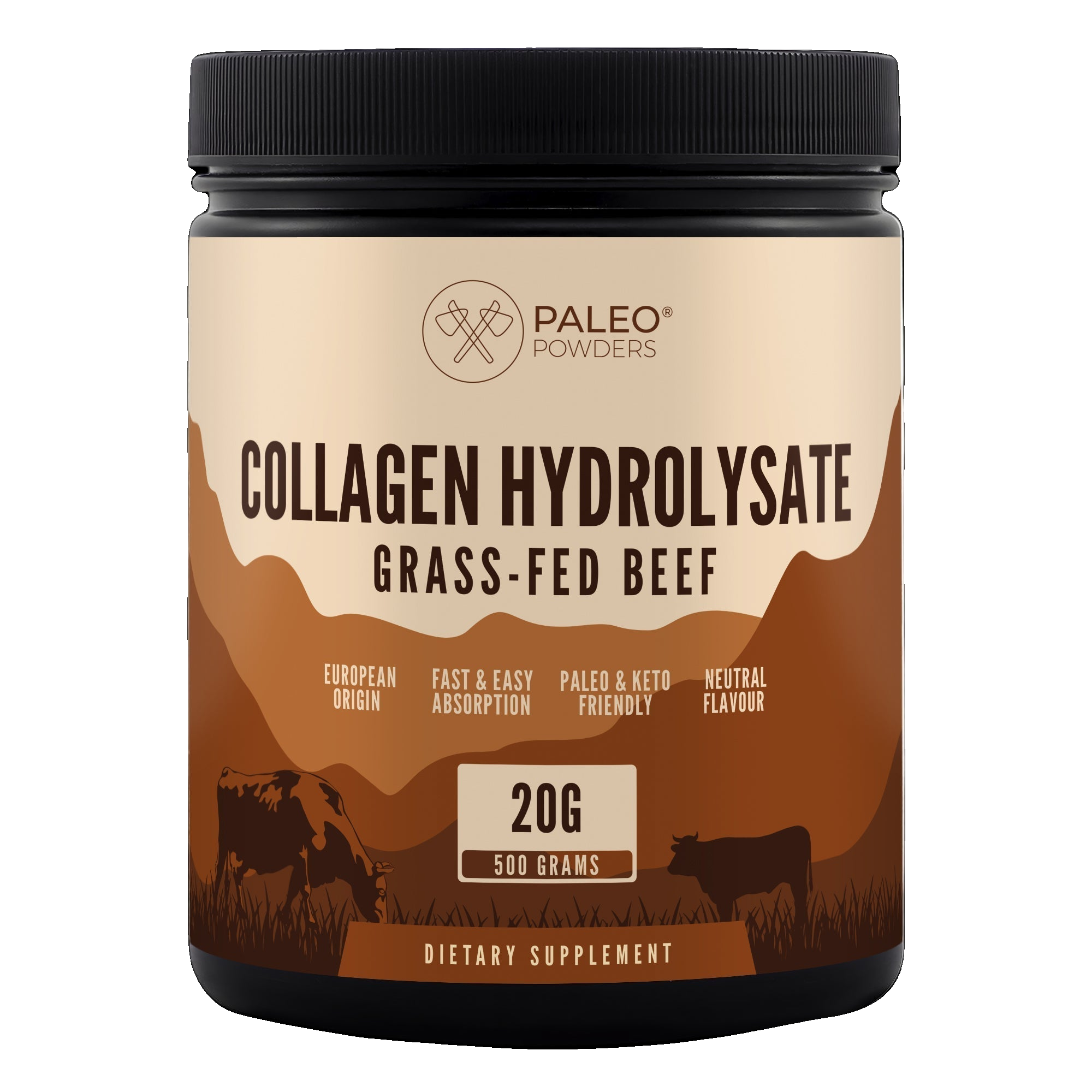
100% collagen hydrolysate from grass-fed European cattle. Contains collagen peptides averaging 2 kDa.
- 92% proteins, in the form of collagen peptides.
- Enzymatically hydrolysed without chemicals.
- Neutral taste, easy to mix in any drink.
Tax included.
 Secure payment

 Fast delivery with UPS
 Money-back guarantee
 Customer rating 9.4/10
Instructions for use
INGREDIENTS
Choose options
Collagen Hydrolysate
Key Benefits

Increase your collagen intake
Taking hydrolysed collagen is an excellent way to increase your daily collagen intake. Your body utilizes the collagen peptides rapidly and easily.

Nose-to-tail essential
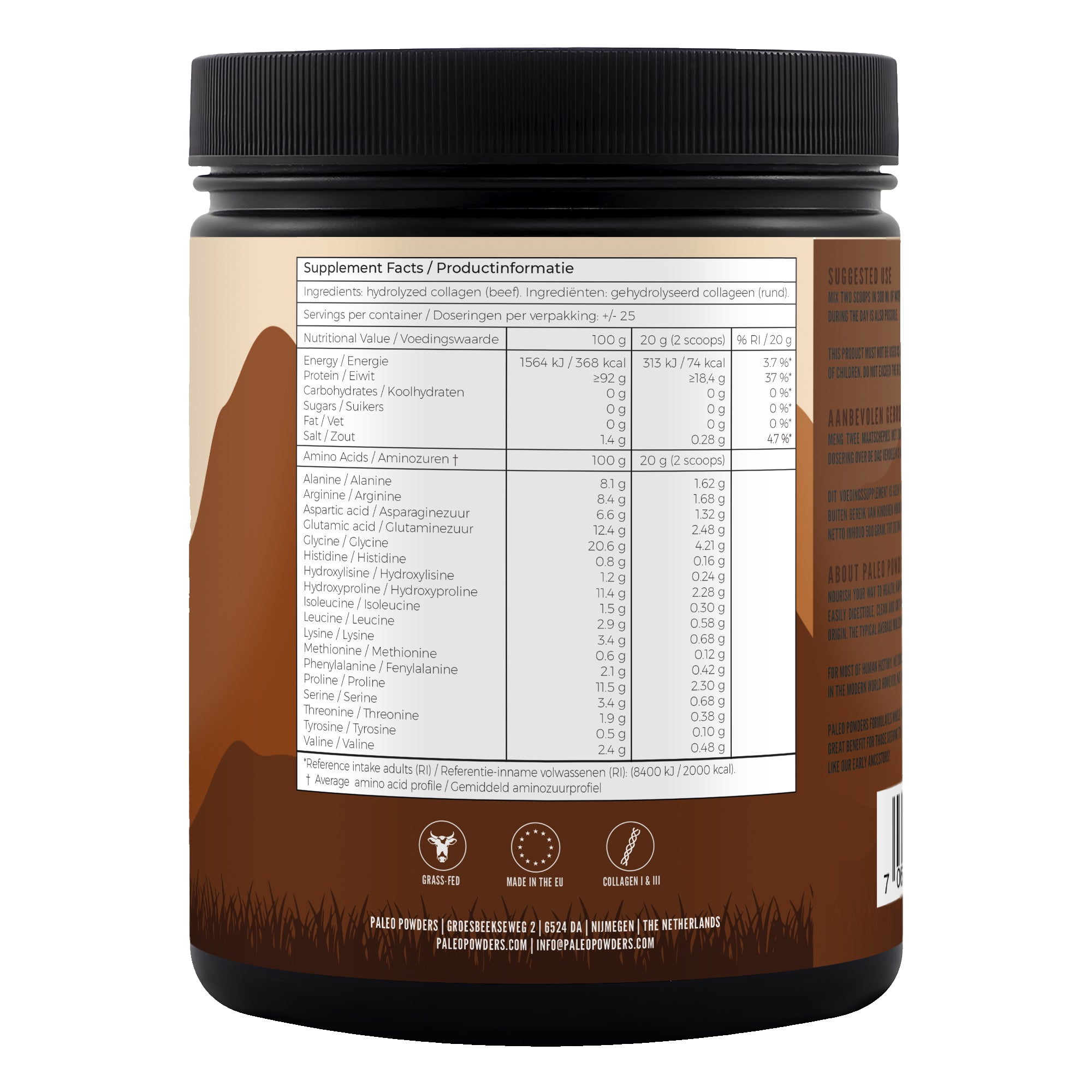
Contains collagen type I and III and provides amino acids including glycine, lysine & (hydroxy)proline in meaningful amounts.

Upgrade yourself
From age 40, collagen production decreases by about 25%. By age 60, it's about 50% lower than it was at a younger age. Collagen supplementation is a popular longevity strategy.
200,000+ Satisfied Customers
My skin is visibly and noticeably firmer.
Diane Kamphoes
Arnhem
Neutral taste, mixes perfectly in smoothies.
Frans van Kateren
Oss
Move healthier and more smoothly thanks to my daily collage shot.
Jayro Oosten
Mechelen, BE
My skin is visibly and noticeably firmer.
Diane Kamphoes
Arnhem
Neutral taste, mixes perfectly in smoothies.
Frans van Kateren
Oss
Move healthier and more smoothly thanks to my daily collage shot.
Jayro Oosten
Mechelen, BE
Ingredients

Collagen Hydrolysate
Type I & III collagen peptides
Bio-active
Small peptides for rapid absorption
Solid protein boost
>92% protein = 18.4 g per serving

Clean label product
Purely natural 100% collagen
0 grams of sugar
Paleo and keto approved
Crucial amino acids
Glycine, lysine & (hydroxy)proline
Why does this work so well?

Precision deployment
Take collagen hydrolysate before or after your workout, physiotherapy session, or red light therapy session.

Focus on collagen
Just like muscles, bones and even your brain, collagen in your body depends on nutrients and stimuli to function properly.

Protein-rich and neutral
An easy solution to boost your daily protein intake, and allergen-free. Beef collagen hydrolysate is suitable for almost everyone!

Fast and excellent recording
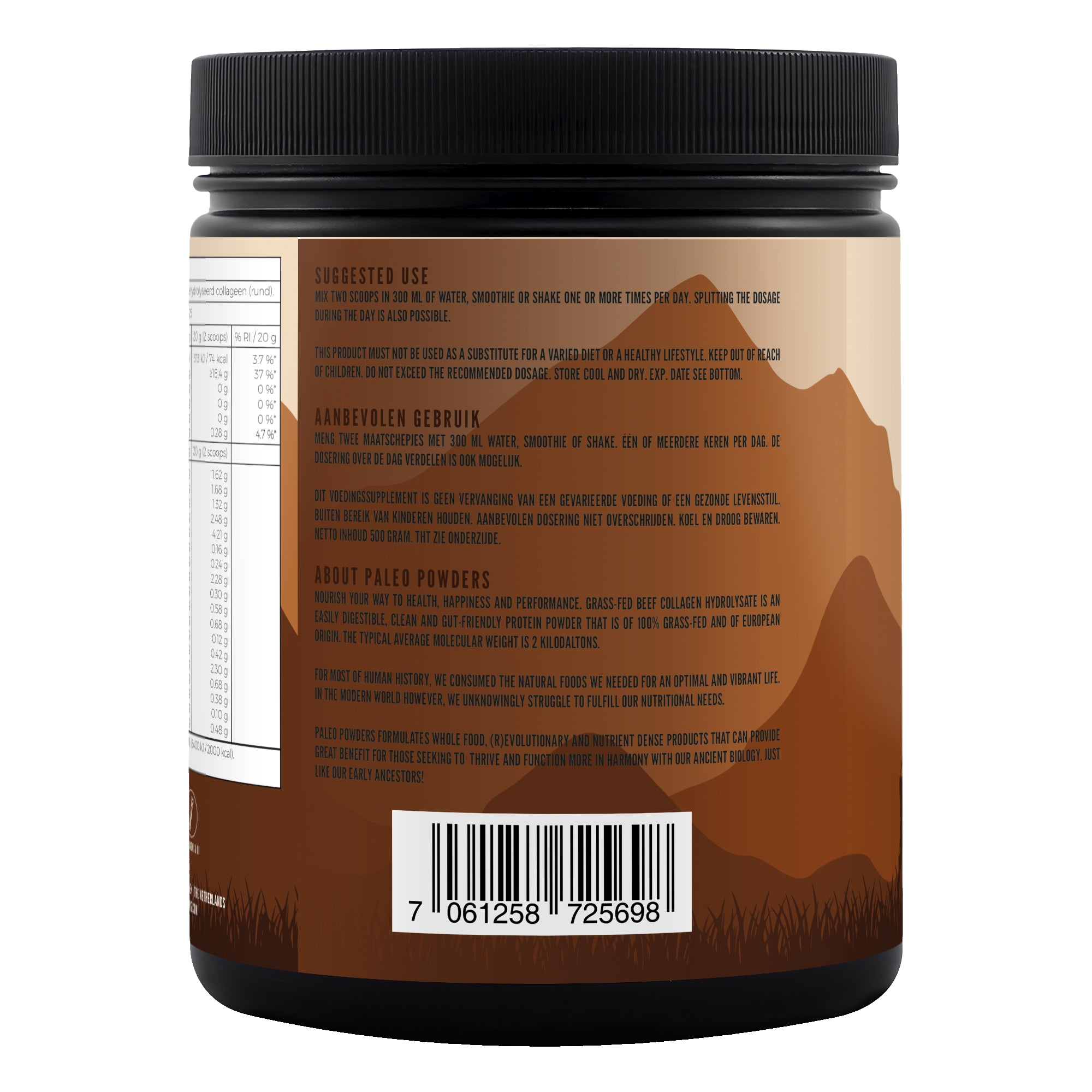
Hydrolysis ensures the peptides are minuscule and biologically readily available. The average molecular weight is 2 kDa.

Balances your diet
Muscle meat contains plenty of l-methionine but little glycine. Collagen, on the other hand, has the opposite effect. This balances the amino acids you consume.

Easy to apply
Scoop, mix, and drink! In less than a minute, you've added 18.4g of high-quality protein to your day. Super convenient!
What exactly is in it?
Each 10–20 g serving contains approximately 90–95% collagen peptides (type I & III), with high concentrations of glycine (~4 g), proline and hydroxyproline (~2.3 g).

Free from sugars and fats, this powerfully supports the build-up of collagen structures in skin, joints and connective tissue.
Thanks to their small molecules, they are quickly absorbed. Ideal as a daily supplement alongside proteins or sports nutrition.
Collagen Through the Ages
Our ancestors lived according to the nose-to-tail principle: they ate the entire animal, including skin, tendons, connective tissue, and organs. This gave them a daily intake of larger amounts of collagen, something largely lacking in the modern diet.

Prehistoric hunter-gatherers derived about half of their energy from animal sources. For modern tribes, that figure is as high as 60%. Lean muscle meat alone simply wasn't enough: survival and vitality required collagen-rich parts.
In our current diets, that rich collagen supply has largely disappeared. We prefer tender muscle meat over connective tissue or tough parts. Vegetarians and vegans consume virtually no collagen anymore. This is despite the fact that collagen is an essential component of skin, bones, and joints, among other body parts. Did you know that collagen isn't a static tissue? It adapts to physical stress. With every step, the structure of the collagen in your knees changes, for example. Sufficient exercise is therefore not only important for muscles but also for maintaining strong, resilient collagen tissues.

Frequently Asked Questions


