
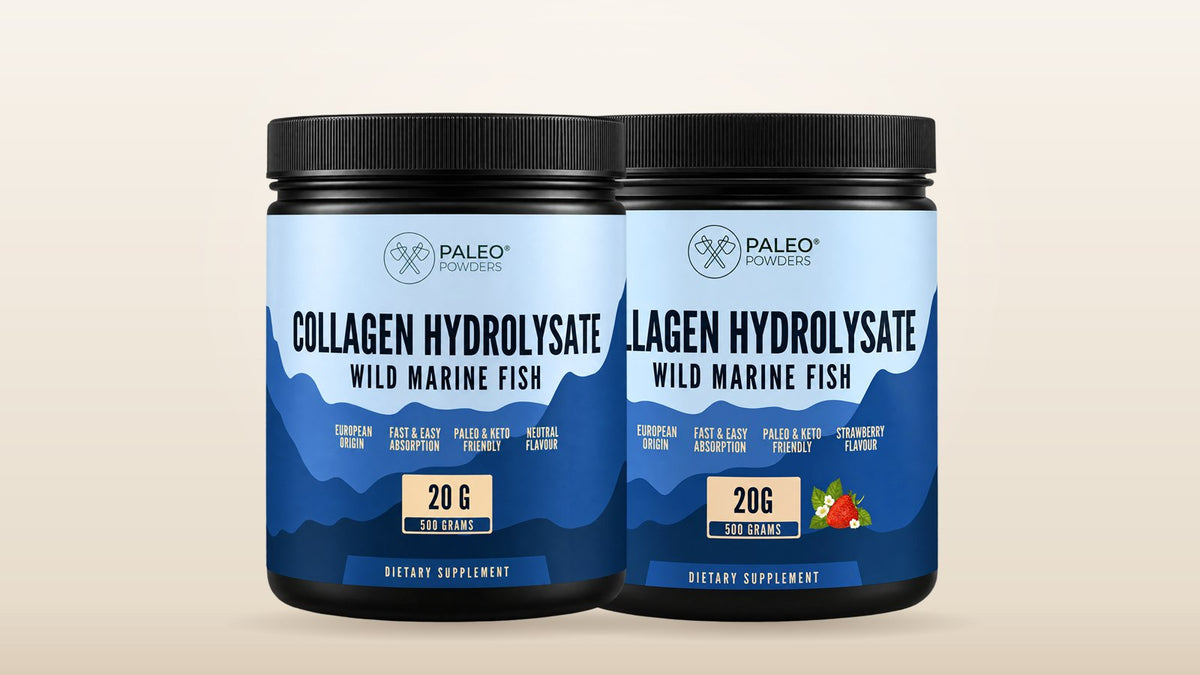
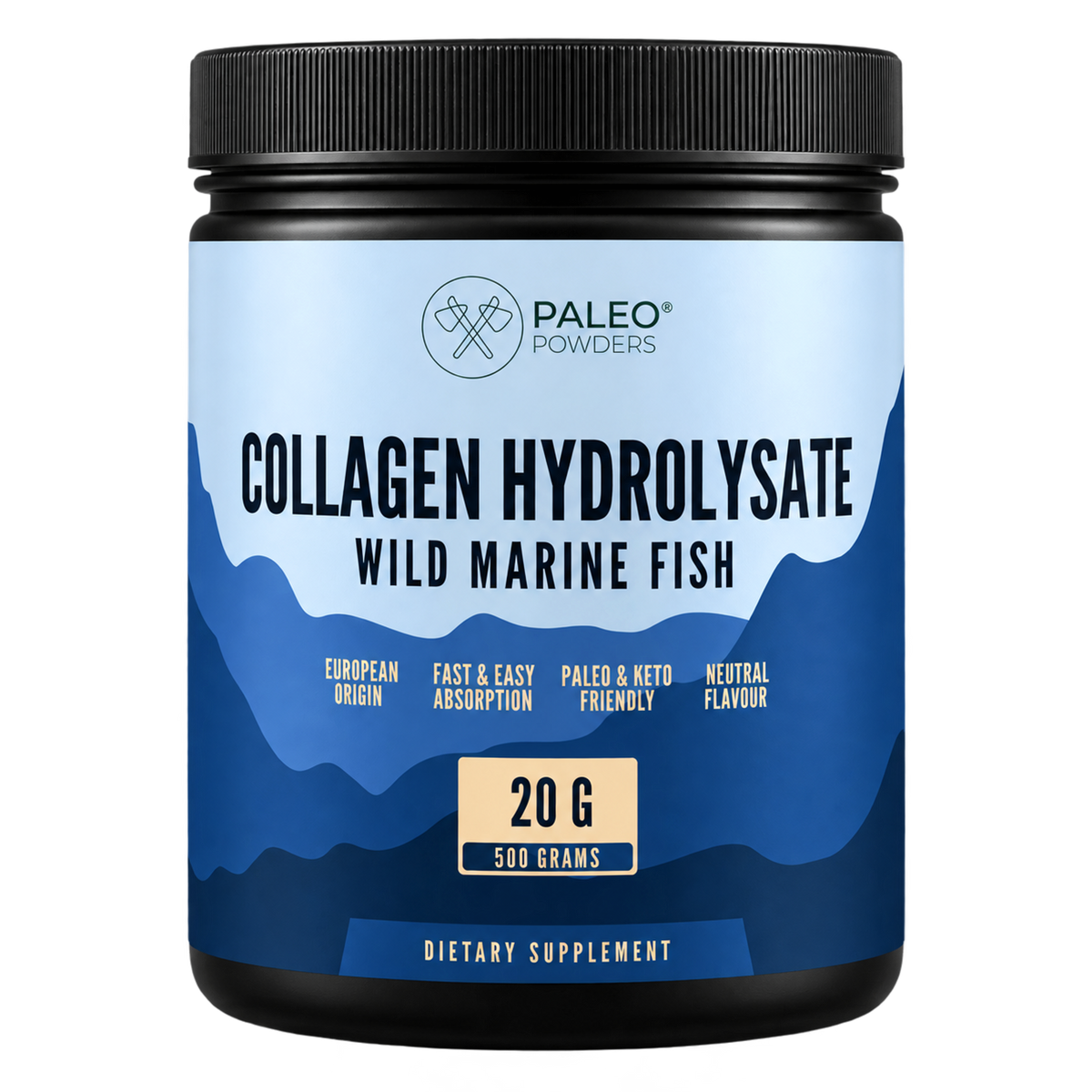
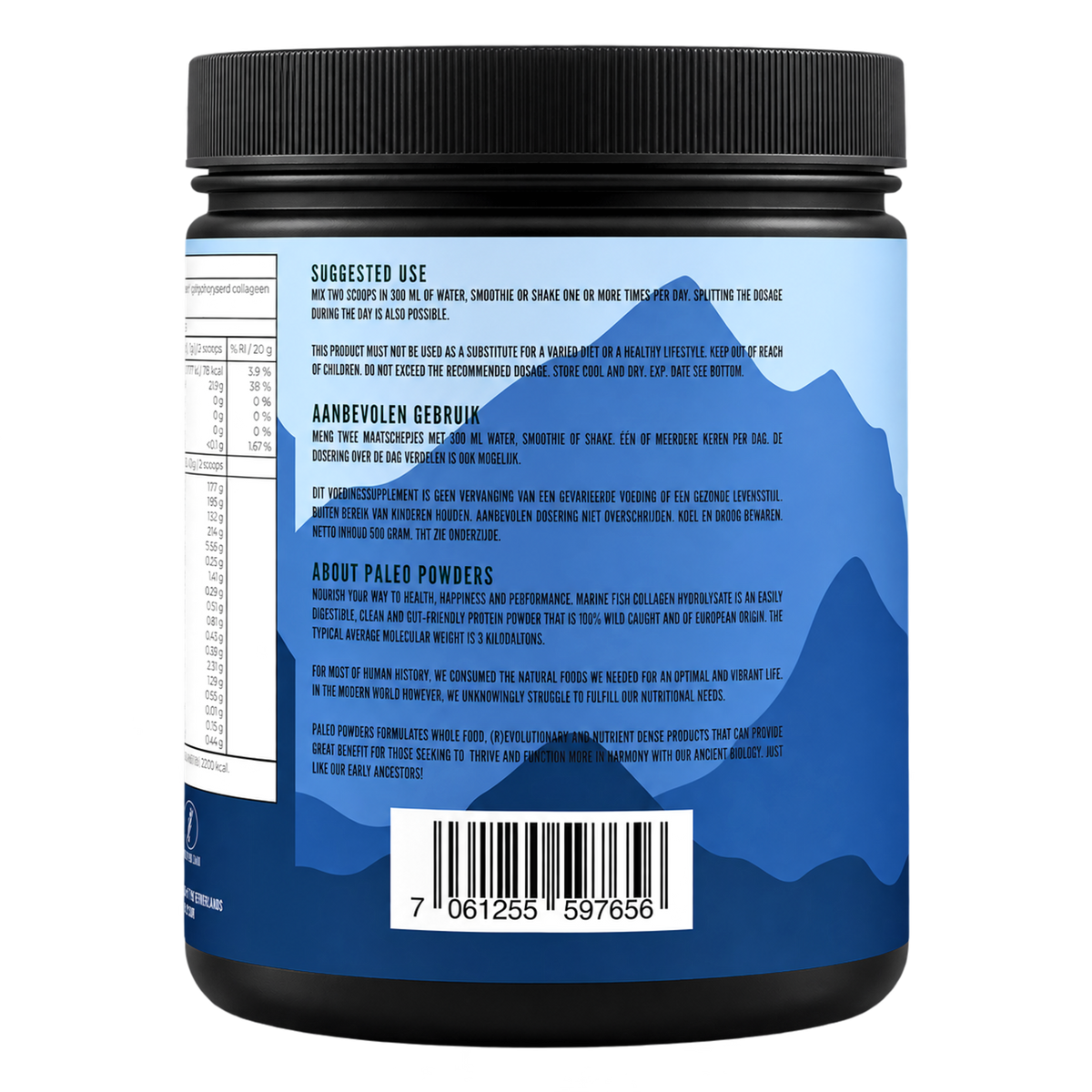
Collagen Hydrolysate - Wild Caught Fish
Looking for a versatile all-in-one supplement? Then Collagen Hydrolysate with natural vitamin C might be for you! This supplement contains the most abundant protein in our body, collagen, which makes up around 25% to 35% of the proteins in our connective tissue, skin, bones and tendons.
What makes collagen so special? Collagen has a unique amino acid composition. The name "collagen" comes from the Greek word "kolla", meaning "glue", because collagen acts as the "cellular glue" that holds all the connective tissue in our body together. The amino acids in collagen are the building blocks of these structures.
If you are looking for a protein supplement with a unique amino acid profile, Collagen Hydrolysate with natural vitamin C is a good choice!
BENEFITS OF COLLAGEN FROM WILD-CAUGHT FISH:
- Belongs to the category of nutricosmetics
- Natural wild strawberry flavour, sweetened with stevia for a delicious taste
- High-quality source of protein
- High concentration of the amino acids glycine, lysine and proline
- Sustainable source of wild-caught fish from Europe
- Type I collagen
- Contains natural vitamin C from acerola; vitamin C contributes to normal collagen formation for the normal function of the skin
- Low molecular weight (3 kDa) for fast absorption
- Dissolves easily in water, without gluten, soy or artificial additives.
NATURAL VITAMIN C
Besides natural vitamin C, this formula contains the natural sweetener stevia and has a light, fresh strawberry flavour. The collagen mixes easily with liquids and is absorbed quickly thanks to its low molecular weight (3 kDa), so the body soon has specific amino acids and compounds at its disposal.
Collagen Hydrolysate belongs to the category of nutricosmetics. The vitamin C in this formula contributes to normal collagen formation for the normal function of the skin. Paleo Powders collagen specifically contains type I collagen of sustainable European origin.
NUTRICOSMETICS
Nutricosmetics is a category of supplements aimed specifically at beauty care from within. These are usually products used with the skin, hair and nails in mind. Nutricosmetics include various forms of natural food supplements that you take, such as collagen and bone broth. By combining collagen and bone broth, you create a nutricosmetic stack that works from different angles.
MAINTENANCE FOR THE BODY
So collagen is not just a nutricosmetic product but, as mentioned, a true all-rounder. The body can make collagen itself; however, from the age of 25 we start producing less of this important protein, until by the age of 50 the body makes hardly any collagen at all.
An adequate daily intake of collagen is an interesting part of the nourishing diet the body has become used to over the course of evolution.
WHY DO YOU NEED COLLAGEN?
- All tissues in your body, including collagen, need input and sufficient nourishment.
- As you get older, your body's ability to produce collagen declines.
- Collagen is an important protein that is often missing from the daily diet. Collagen and its specific amino acids bring balance to your protein and amino acid intake. This is specifically due to the ratio of L-methionine to glycine. Collagen is very rich in the latter.
UPGRADE YOURSELF FROM WITHIN
Increasing your collagen intake is not limited to food supplements. You can also make your own bone broth and stews, for example, or eat tougher cuts of meat instead of fillets. Using collagen hydrolysate supplements is above all very practical and saves time. Collagen hydrolysate from wild fish is an excellent choice for quickly and easily supplementing your daily diet with important amino acids.
GLYCINE, LYSINE & (HYDROXY)PROLINE
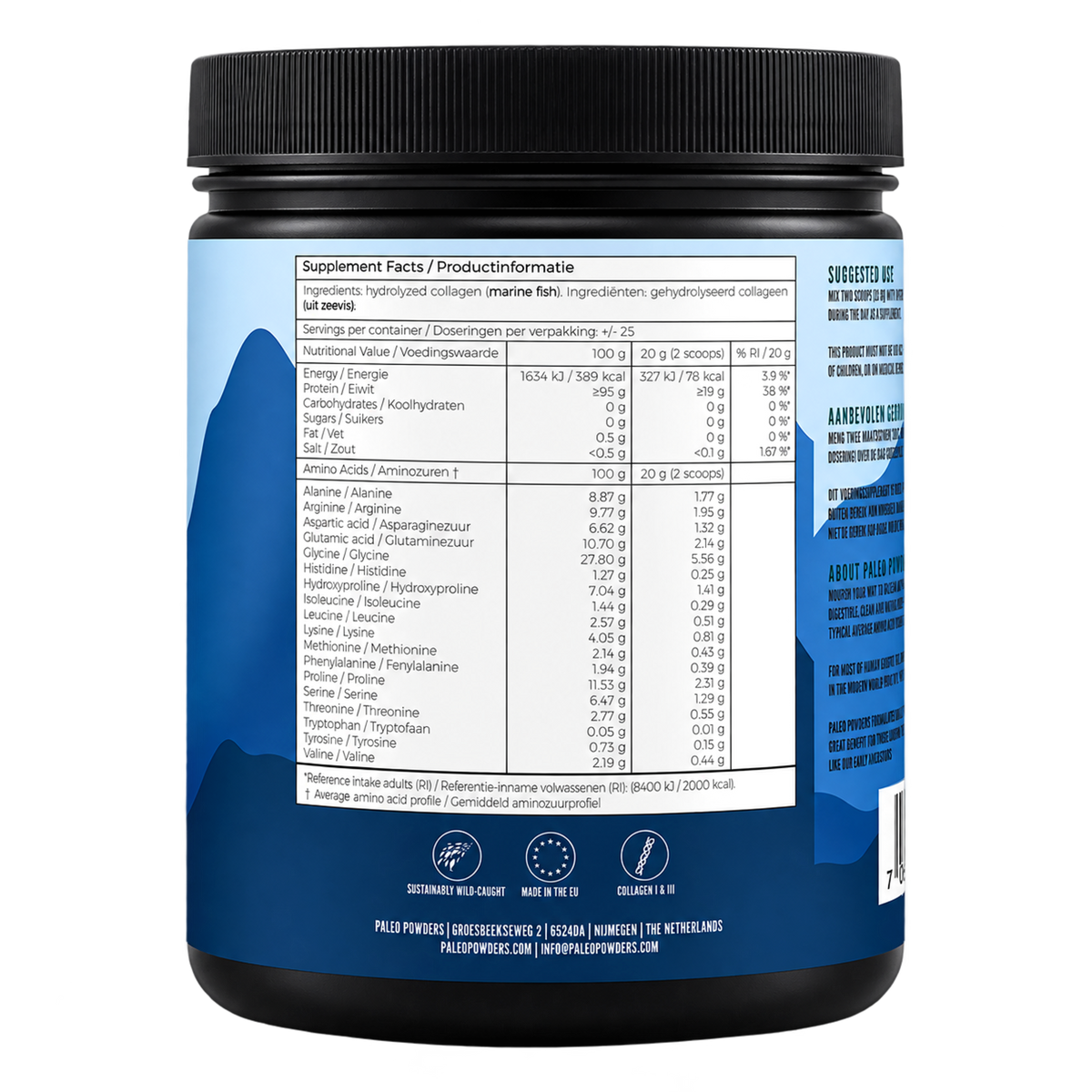
Although collagen hydrolysate does not contain all essential amino acids, it does contain three amino acids that you won't find to the same extent in other protein sources. In particular, the high concentrations of glycine, proline and hydroxyproline make collagen unique. These three amino acids occur only in small amounts in plant foods. Glycine, proline and hydroxyproline are the three most abundant amino acids in collagen. In the human body, these three amino acids occur in roughly the same ratio as in collagen supplements.
KETO AND PALEO APPROVED
Collagen hydrolysate from wild fish is made from paleo-approved ingredients from paleo-responsible sources. Because collagen hydrolysate is almost pure protein, without sugars or fats, it fits almost any diet, from keto to even low-fat. Products of wild origin are among the most nutritious there are, and wild-caught fish from the clean waters of the Atlantic Ocean is no exception. Collagen hydrolysate is also easy to digest and is absorbed quickly.
100% EUROPEAN ORIGIN
Our collagen hydrolysate is made from wild fish caught in the Atlantic Ocean, FAO fishing area 27, and production takes place exclusively in Europe. This means the quality of the product is controlled and guaranteed from start to finish. Sourcing our wild fish collagen responsibly in Europe is more sustainable than buying from unreliable sources in, for example, China. Paleo Powders marine collagen is therefore the best choice in terms of quality, sustainability and environmental philosophy.
MADE FROM WILD SEA FISH
By hydrolysing (cutting into pieces) the collagen proteins from high-quality fish skins naturally and gently with enzymes, peptides with a low molecular weight of 3 kDa are created. The powder has a very neutral taste, making it an ideal ingredient for shakes, smoothies and even recipes. Thanks to the low molecular weight of the collagen particles, they are absorbed efficiently and quickly. With a protein concentration of up to 95% per serving, this food supplement is as pure as it gets.
QUALITY MATTERS
Not all collagen powders are of the same quality. In 2020, the Clean Label Project analysed 30 collagen products for the heavy metals arsenic, cadmium, lead and mercury. The report showed that mercury levels in 100% of the collagen supplements tested were within safe food standards, although 34% did contain low measurable concentrations. However, 37% tested positive for high concentrations of lead and 17% for high concentrations of cadmium.
Animal-friendly and sustainable sourcing solves a large part of these problems. The report emphasises that heavy-metal contamination is a by-product of concentrated animal feeding and animal processing. Fortunately, for this product we choose only European wild-caught sea fish. Another factor that, according to the report, contributes to heavy-metal contamination is air pollution. Unfortunately, that is a fact of the modern world, but it can be addressed with the right processing technologies.
TESTED FOR HEAVY METALS
Quality control, product safety and transparency are very important to us. That is why we thoroughly screen every certificate of analysis and have every new batch double-analysed in an independent laboratory. This is how we guarantee quality! Typical heavy-metal values in our sea fish collagen hydrolysate:
- Arsenic (As) < 0.10 mg/kg = < 0.1 PPM
- Cadmium (Cd) < 0.01 mg/kg = < 0.01 PPM
- Lead (Pb) < 0.10 mg/kg = < 0.10 PPM
- Mercury (Hg) < 0.005 mg/kg = < 0.005 PPM
DIFFERENCES BETWEEN FISH COLLAGEN, BONE BROTH & KEFIR
|
Fish Collagen |
Bone Broth |
Kefir Whey |
|
Neutral taste |
Mildly savoury |
Creamy |
|
Fast absorption |
Normal absorption |
Fast absorption |
|
Hydrolysed |
Not hydrolysed |
Semi-hydrolysed |
|
Collagen type I |
Collagen types I to V |
No collagen |
|
Enzymatic |
Slow-simmered |
Kefir-fermented |
|
95% protein |
98% protein |
90% protein |
|
95% collagen |
78–84% collagen |
0% collagen |
|
No dairy |
No dairy |
Dairy whey |
|
0% fat |
2–5% fat |
0% fat |
|
0% sugars |
0% sugars |
0% sugars |
|
Glycine 21.6% |
Glycine 20% |
Glycine 1.5% |
|
BCAAs 7.42% |
BCAAs 8.4% |
BCAAs 23.75% |
|
Hydroxyproline 10.6% |
Hydroxyproline 10.2% |
Hydroxyproline 0% |
|
From skin |
Meaty bones |
Pasture milk |
|
No glucosamine |
Contains glucosamine |
No glucosamine |
|
No chondroitin |
Contains chondroitin |
No chondroitin |
|
No hyaluronic acid |
Contains hyaluronic acid |
No hyaluronic acid |
PRIMAL BACKGROUND
Our ancestors from the hunter-gatherer era, and even many generations after them, ate far more collagen than we do now. That was because of their heavy reliance on animal foods. For the survival of our ancestors and the continuation of our species, there was no question about it: whoever managed to catch an animal used the spoils from head to toe. Whoever wanted to survive ate the whole animal – tendons, cartilage, skins and connective tissues, everything that was wholesome; even the bones were eaten or made into tools and weapons. Sea animals, land animals or a combination of both: nose-to-tail eating was the norm!
MIGRATION: EATING MORE CARNIVOROUSLY
It is known that when hunter-gatherers moved north from the equator, they could eat fewer plants. The colder it got, the fewer plants grew naturally. Since plant foods decrease considerably with increasing latitude, this was compensated for with animal foods. Prehistoric hunter-gatherer groups generally obtained about 50% of their diet from animal sources. Modern hunter-gatherer societies obtain about 60% of their diet from animal sources.
THE NOSE-TO-TAIL CONCEPT
In prehistoric times, eating only lean muscle meat, without the fats, organs, glands and collagen tissues, would not have been enough to thrive, or even to survive. A considerable share of animal food sources would have consisted of nutrient-rich and collagen-rich tissues. In the modern world, we generally eat mainly lean muscle meat. We gave up nose-to-tail eating decades ago. Today, collagen-rich or tough meat and other animal parts are no longer preferred over leaner, more tender meat.
The difference between historical and modern daily collagen consumption is therefore striking. Vegetarians and vegans tend to consume even less collagen. From a paleo perspective, which champions the nose-to-tail concept, it is important to eat enough collagen.
FASCINATING COLLAGEN DYNAMICS
The maintenance and quality of collagen depend not only on an adequate daily diet but also on mechanical stress on the body, such as during sport and exercise. Collagen can quickly change its crystallinity in response to physical forces. For example, the crystallinity and arrangement of the collagen molecules in the cartilage of your knees change with every step you take. Due to the changing mechanical load on each knee during a step, the structural state of the collagen shifts back and forth. The saying "use it or lose it" applies not only to muscles and bones but also to collagen tissue. If you don't load your tissues enough with the right stimuli, they lose quality and functionality! Plenty of varied movement is part of our human heritage. Fortunately, it is an integral part of a paleo lifestyle.
SYNERGY BETWEEN COLLAGEN & WATER
Water is another important paleolithic factor relevant to your collagen. After water, collagen is the most abundant substance in your body. In its natural state, 60% of the weight of collagen consists of water. Water is therefore an integral part of collagen. Water molecules can bind tightly to collagen and neatly follow its helix shape. The complex dynamics of water molecules in hydrated collagen tissue play an important role in determining its structural and functional properties. In other words: good hydration matters for your collagen. So take good care of your mitochondria and drink enough clean water every day. Alongside exercise and nutrition, this should be at the top of everyone's list when it comes to collagen.
HIERARCHY OF HEALTH FACTORS
Of course, sleep, earthing and sensible exposure to sunlight are also critical lifestyle factors for collagen throughout the body. Sleep provides a longer period of recovery, while sunlight provides red and near-infrared light, especially around sunrise and sunset. Earthing – barefoot contact with the earth – supplies the connective tissue matrix with electrons from the earth.
THE MOST ABUNDANT PROTEIN
Did you know that there are several kinds of "most abundant" proteins in nature? Collagen, for example, is the most abundant protein in the animal kingdom. There are at least 16 types of collagen, but 80–90% of the collagen in the body consists of types I, II and III. Actin is the most abundant protein in most eukaryotic cells. It is highly conserved and takes part in more protein-protein interactions than any other known protein. These properties make actin a critical player in many cellular functions. In the plant kingdom we find RuBisCO (ribulose-1,5-bisphosphate carboxylase-oxygenase). It is considered the most abundant protein in the world, because it is present in every plant that carries out photosynthesis and molecular synthesis during the Calvin cycle. It has been calculated that RuBisCO makes up 20–25% of the soluble protein in leaves. It is produced on earth at a rate of about 1,000 kg per second.
Conclusion
Collagen Hydrolysate with natural vitamin C is a versatile supplement. With its origin in sustainable European sources and its unique combination of amino acids and natural vitamin C, this supplement is a valuable addition to your daily routine. So if you are looking for a holistic way to complement your diet, Collagen Hydrolysate with natural vitamin C is the perfect choice!


Read more
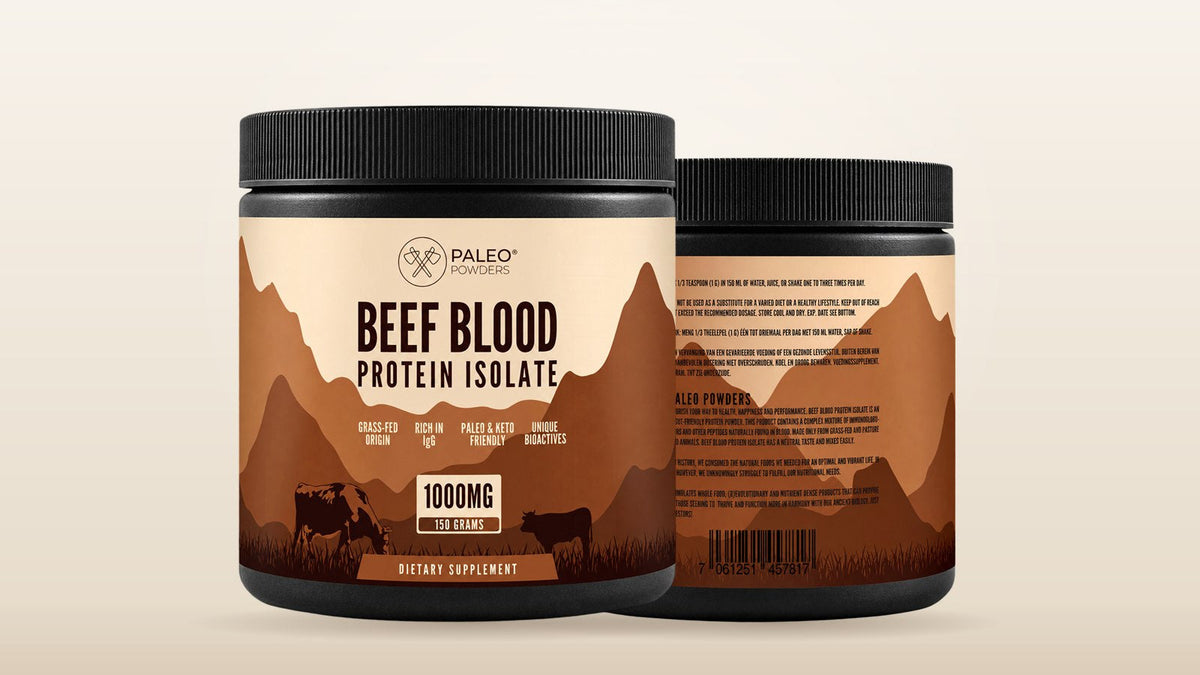
Beef Blood Protein Isolate - Grass-Fed
Beef blood is a valuable source of bioactive nutrients, just like beef organs, glands, muscle, bone and skin. It provides a wide range of building blocks. The beef blood protein isolate from Paleo ...
Read moreBeef Blood Protein Isolate - Grass-Fed
Beef blood is a valuable source of bioactive nutrients, just like beef organs, glands, muscle, bone and skin. It provides a wide range of building blocks. The beef blood protein isolate from Paleo ...
Read more