
Organ meat nutrition chart: nutrients per organ (per 100 grams)
Organ meat has a reputation for being packed with nutrients. But how much does it really contain, and which organ stands out? On this page you can compare the nutritional value of seven beef organs side by side: liver, kidney, heart, spleen, brain, tongue and thymus (sweetbread). All values are per 100 grams of raw product and are compared with lean beef (sirloin steak). The figures come from the public USDA FoodData Central database. The percentages are based on the EU reference intakes, the same values you see on food labels.
You are free to use the tables and the graphic, as long as you link to this page as the source. You will find a ready-made attribution further down.
The key differences at a glance
- Liver contains 4,968 µg of vitamin A per 100 grams (621% of the reference intake), 59.3 µg of vitamin B12 (2,372%) and 9.76 mg of copper (976%). No other organ in the table comes close.
- Kidney has the highest selenium content: 141 µg per 100 grams (256%). Kidney also contains a lot of vitamin B12 (27.5 µg) and vitamin B2 (2.84 mg).
- Spleen is the standout for iron: 44.6 mg per 100 grams (318%), almost 28 times as much as sirloin. Spleen also contains a notable amount of vitamin C (45.5 mg).
- Heart is similar to ordinary muscle meat in protein and fat, but contains almost 8 times as much vitamin B12 and almost 3 times as much iron as sirloin.
- Brain is fattier than most organs and contains 3,010 mg of cholesterol per 100 grams, by far the most of all organs in this table.
- Tongue and thymus are the fattiest cuts (16 to 20 grams of fat per 100 grams). In terms of vitamins and minerals they are closer to ordinary meat.

Table 1: energy, protein, fat and cholesterol
| Organ | Energykcal | Proteing | Fatg | Cholesterolmg |
|---|---|---|---|---|
| Liver | 135 | 20.4 | 3.6 | 275 |
| Kidney | 99 | 17.4 | 3.1 | 411 |
| Heart | 112 | 17.7 | 3.9 | 124 |
| Spleen | 105 | 18.3 | 3.0 | 263 |
| Brain | 143 | 10.9 | 10.3 | 3,010 |
| Tongue | 224 | 14.9 | 16.1 | 87 |
| Thymus | 236 | 12.2 | 20.4 | 223 |
| Sirloin steak (lean) | 131 | 22.1 | 4.1 | 60 |
Per 100 grams, raw.
Liver, kidney, heart and spleen contain about as much protein as lean beef (17 to 20 grams per 100 grams) and little fat. Brain, tongue and thymus contain less protein and considerably more fat.
Table 2: vitamins per 100 grams
| Organ | Vitamin Aµg RAE | B1 (thiamin)mg | B2 (riboflavin)mg | B3 (niacin)mg | B5 (pantothenic acid)mg | B6mg | Folateµg | B12µg | Vitamin Cmg |
|---|---|---|---|---|---|---|---|---|---|
| Liver | 4,968621% | 0.1917% | 2.76197% | 13.282% | 7.2120% | 1.0877% | 290145% | 59.32,372% | 1.32% |
| Kidney | 41952% | 0.3632% | 2.84203% | 8.050% | 4.066% | 0.6647% | 9849% | 27.51,100% | 9.412% |
| Heart | 00% | 0.2422% | 0.9165% | 7.547% | 1.830% | 0.2820% | 32% | 8.6342% | 2.02% |
| Spleen | 00% | 0.055% | 0.3726% | 8.452% | 1.118% | 0.075% | 42% | 5.7227% | 45.557% |
| Brain | 7<1% | 0.098% | 0.2014% | 3.622% | 2.033% | 0.2316% | 32% | 9.5380% | 10.713% |
| Tongue | 00% | 0.1311% | 0.3424% | 4.226% | 0.711% | 0.3122% | 74% | 3.8152% | 3.14% |
| Thymus | 00% | 0.1110% | 0.3424% | 3.522% | 3.050% | 0.1611% | 21% | 2.185% | 34.042% |
| Sirloin steak (lean) | 00% | 0.076% | 0.118% | 6.843% | 0.711% | 0.6244% | 136% | 1.144% | 0.00% |
Per 100 grams, raw. Small figures: % of the adult reference intake (RI). Orange: 100% or more, dark orange: 300% or more.
In the USDA database, choline was only measured for liver and steak: 333 mg per 100 grams of liver, compared with 92 mg in steak. There is no EU reference intake for choline, which is why it is not in the table.
Table 3: minerals per 100 grams
| Organ | Ironmg | Zincmg | Coppermg | Seleniumµg | Phosphorusmg |
|---|---|---|---|---|---|
| Liver | 4.935% | 4.040% | 9.76976% | 39.772% | 38755% |
| Kidney | 4.633% | 1.919% | 0.4343% | 141.0256% | 25737% |
| Heart | 4.331% | 1.717% | 0.4040% | 21.840% | 21230% |
| Spleen | 44.6318% | 2.121% | 0.1717% | 62.2113% | 29642% |
| Brain | 2.618% | 1.010% | 0.2929% | 21.339% | 36252% |
| Tongue | 3.021% | 2.929% | 0.1717% | 9.417% | 13319% |
| Thymus | 2.115% | 2.121% | 0.055% | 18.133% | 39356% |
| Sirloin steak (lean) | 1.612% | 4.040% | 0.088% | 27.149% | 20730% |
Per 100 grams, raw. Small figures: % of the adult reference intake (RI). Orange: 100% or more, dark orange: 300% or more.
Much of the iron in organ meat and meat is heme iron. Read more in heme iron and organ meat.
Which organ contains the most? Compared with steak
For each nutrient, the table below shows the organ with the highest content and how many times that is compared with lean beef.
| Nutrient | Highest content | Per 100 g | % RI | Sirloin (lean) | Difference |
|---|---|---|---|---|---|
| Vitamin A | Liver | 4,968 µg RAE | 621% | 0 µg RAE | – |
| B12 | Liver | 59.3 µg | 2,372% | 1.1 µg | 54× |
| Copper | Liver | 9.76 mg | 976% | 0.08 mg | 122× |
| Iron | Spleen | 44.6 mg | 318% | 1.6 mg | 28× |
| Selenium | Kidney | 141.0 µg | 256% | 27.1 µg | 5.2× |
| B2 (riboflavin) | Kidney | 2.84 mg | 203% | 0.11 mg | 26× |
| Folate | Liver | 290 µg | 145% | 13 µg | 22× |
| B5 (pantothenic acid) | Liver | 7.2 mg | 120% | 0.7 mg | 11× |
| Vitamin C | Spleen | 45.5 mg | 57% | 0.0 mg | – |
| B1 (thiamin) | Kidney | 0.36 mg | 32% | 0.07 mg | 5.3× |
| B3 (niacin) | Liver | 13.2 mg | 82% | 6.8 mg | 1.9× |
| B6 | Liver | 1.08 mg | 77% | 0.62 mg | 1.7× |
| Phosphorus | Thymus | 393 mg | 56% | 207 mg | 1.9× |
| Zinc | Liver | 4.0 mg | 40% | 4.0 mg | ≈ equal |
| Choline* | Liver | 333 mg | – | 92 mg | 3.6× |
Difference = content in the organ divided by the content in lean beef. * Choline was only measured for liver and steak in the USDA database; there is no EU reference intake for choline.
Worth noting: for zinc and protein, ordinary beef holds its own against organ meat. Sirloin contains 4.0 mg of zinc per 100 grams, as much as liver.
Note: with liver, a little goes a long way
A high content is not automatically better. For vitamin A and copper, the European Food Safety Authority (EFSA) has set a safe upper limit for adults: 3,000 µg of vitamin A (as retinol, the form found in liver) and 5 mg of copper per day. With 4,968 µg of vitamin A and 9.76 mg of copper, 100 grams of raw beef liver is already well above both limits.
A 50-gram portion of liver contains about 2,500 µg of vitamin A and 4.9 mg of copper. Because these upper limits refer to your average, long-term intake, liver is best eaten in small portions and not every day. A practical guideline is a portion of 50 to 100 grams once or twice a week. Read more in is eating liver healthy?
If you are pregnant or trying to conceive, eating liver is not recommended because of its high vitamin A content. If in doubt, talk to your midwife or doctor.
Spleen also deserves a note: 100 grams contains 44.6 mg of iron, more than the 40 mg per day that EFSA considers a safe intake for adults. With 141 µg of selenium per 100 grams, kidney stays well below the upper limit of 255 µg per day.
How to read these tables
- Raw, per 100 grams of edible portion. Frying or stewing evaporates moisture, so the content per 100 grams goes up. Some vitamins, such as vitamin C and some B vitamins, are lost during cooking.
- Averages. The values come from USDA FoodData Central (SR Legacy dataset) and are based on American beef. The animal's diet, age and breed cause variation, especially for vitamin A in liver.
- % reference intake (RI). Calculated from the adult reference intakes in EU Regulation 1169/2011, Annex XIII.
- Sirloin here is top sirloin steak, lean only, raw (USDA FDC 174055).
- Bone marrow and testicles are not included in this dataset, so they are missing from the table.
Not a fan of the taste?
Not everyone likes liver or kidney, and organ meat is not available everywhere. An alternative is freeze-dried organ meat in capsules. Freeze-drying only removes the water. A daily dose corresponds to a small amount of fresh organ meat, so much less than the 100-gram portions in these tables.
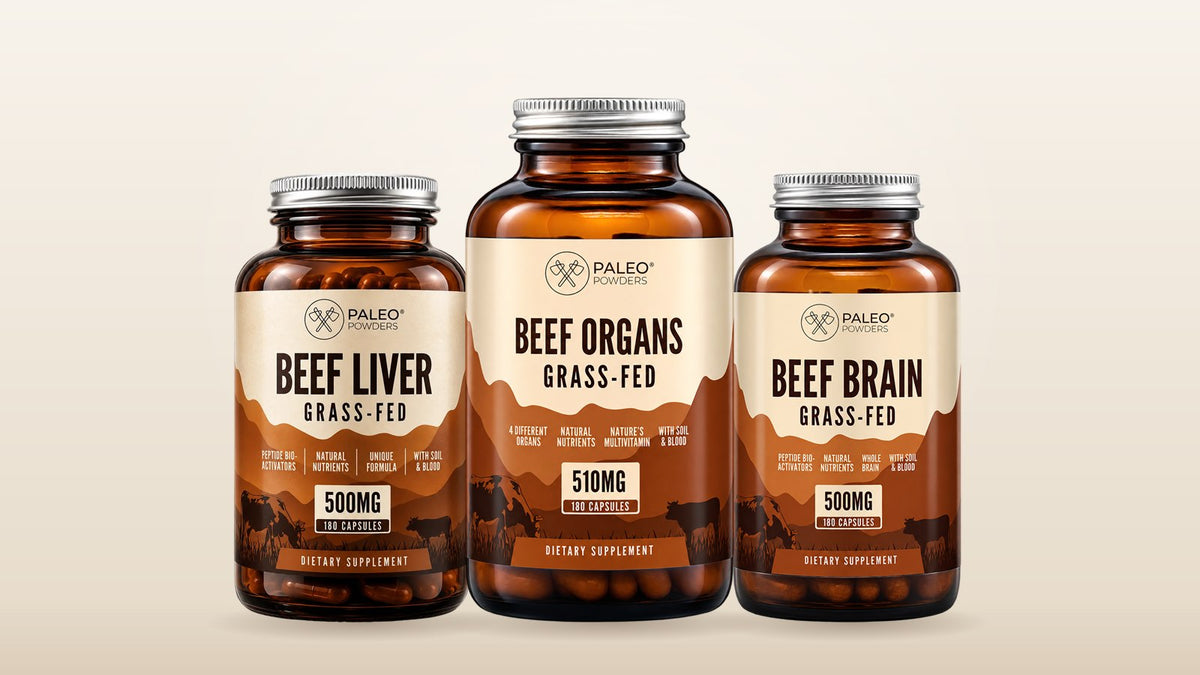
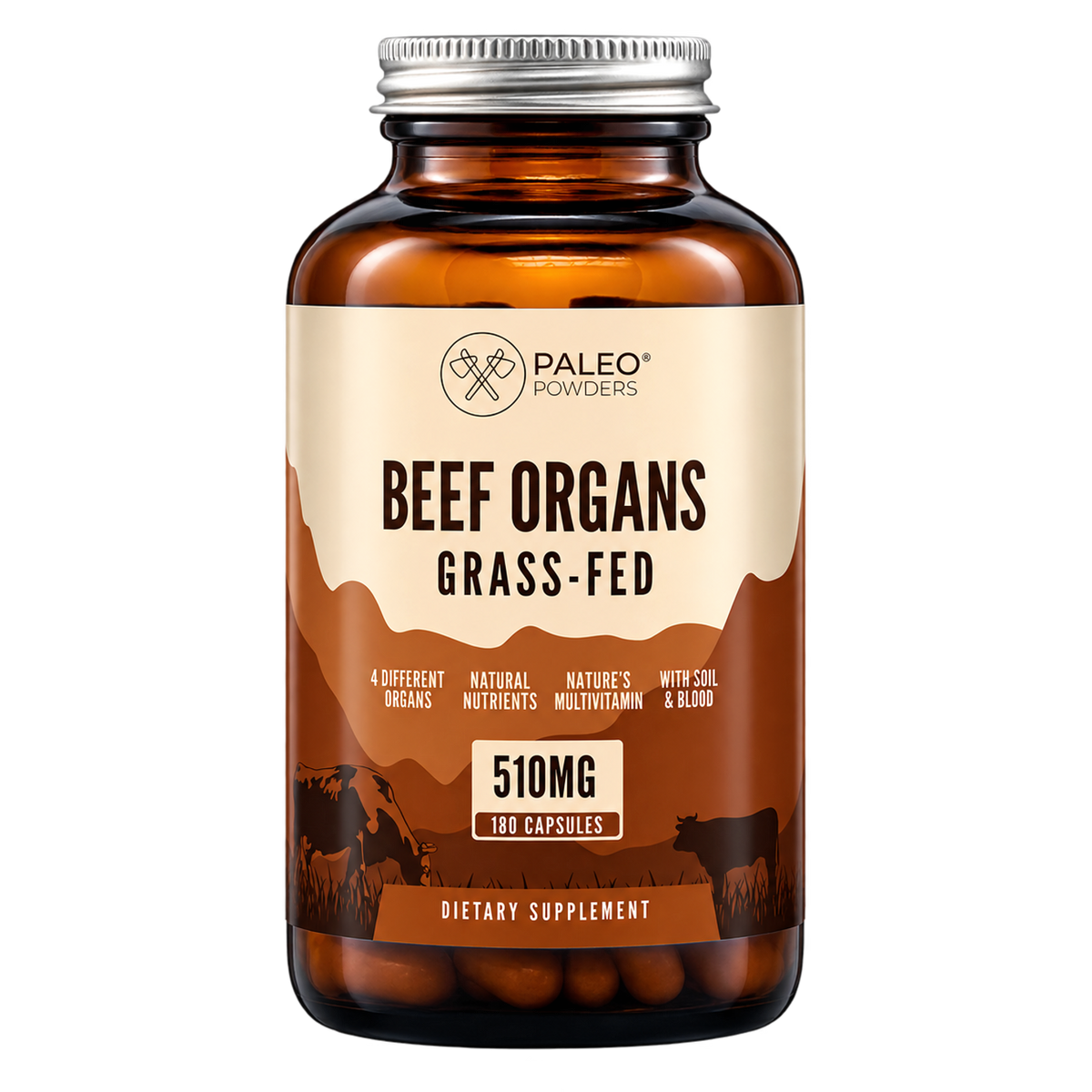
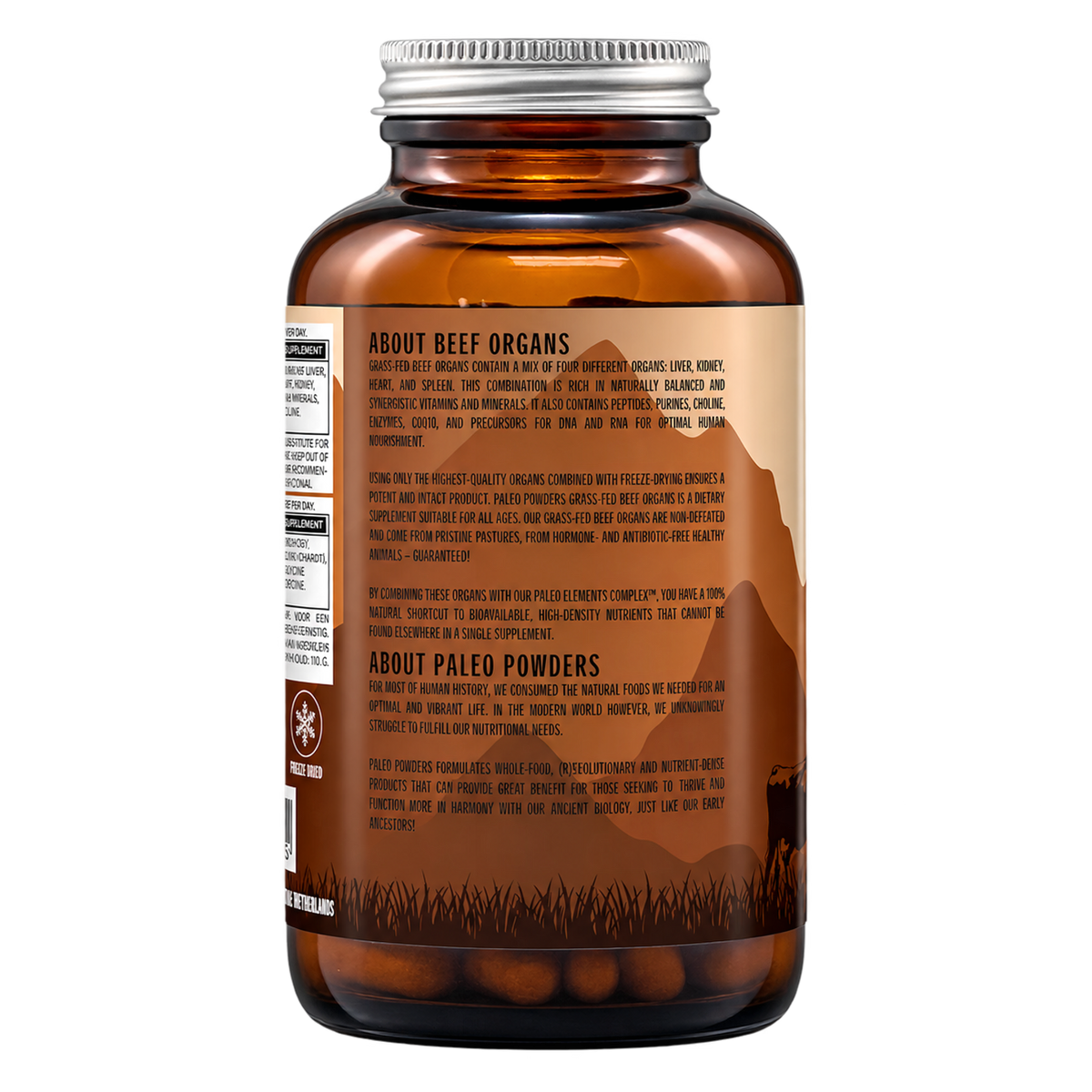
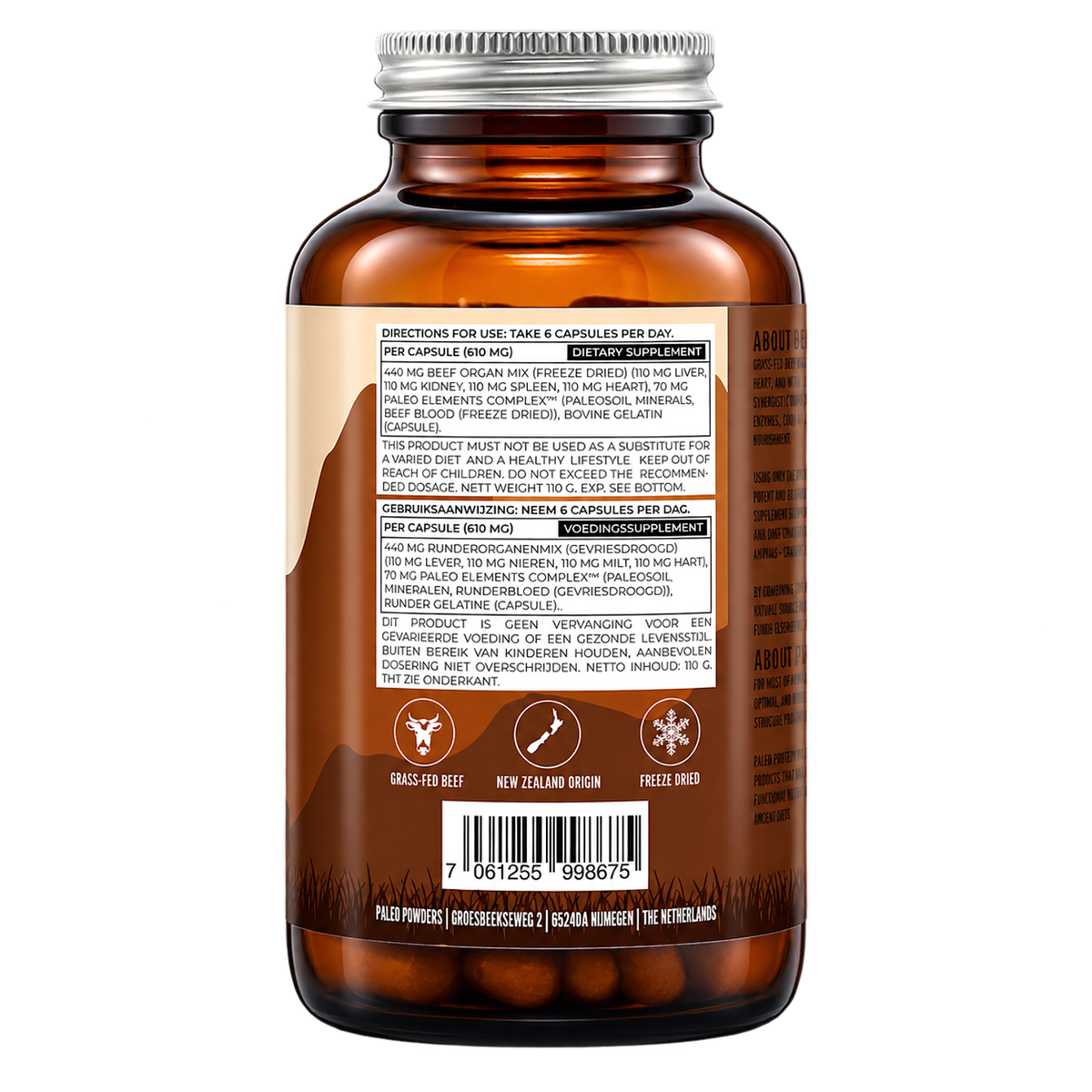
The Beef Organ Mix contains liver, kidney, spleen and heart from grass-fed cattle in one capsule. Prefer a single organ? Then there are beef liver capsules and beef brain capsules. Want to know more about the role of organs in a traditional diet? Read organ meat: full of vitamins, naturally.
Using or sharing this table
You may use the tables and the graphic on your website, in a presentation or in teaching materials, as long as you link to this page. For example, copy this attribution:
Source: <a href="https://www.paleopowders.com/en/blogs/news/organ-meat-nutrition-chart-per-organ">Paleo Powders, organ meat nutrition chart</a> (data: USDA FoodData Central)
Or embed the graphic directly on your own page:
<a href="https://www.paleopowders.com/en/blogs/news/organ-meat-nutrition-chart-per-organ"><img src="https://cdn.shopify.com/s/files/1/0034/9093/8929/files/Paleo-Powders-Orgaanvlees-Heatmap-EN.png" alt="Organ meat nutrition per 100 grams" width="800"></a><br>Source: <a href="https://www.paleopowders.com/en/blogs/news/organ-meat-nutrition-chart-per-organ">Paleo Powders</a>
Sources
- U.S. Department of Agriculture, Agricultural Research Service. FoodData Central, SR Legacy (2019): liver (169451), kidney (169449), heart (168625), spleen (169454), brain (168622), tongue (170196), thymus (170194), sirloin, lean (174055).
- Regulation (EU) No 1169/2011, Annex XIII: reference intakes for vitamins and minerals.
- EFSA NDA Panel. Tolerable upper intake level for preformed vitamin A and β-carotene. EFSA Journal. 2024;22(6):e8814.
- EFSA Scientific Committee. Re-evaluation of the existing health-based guidance values for copper. EFSA Journal. 2023;21(1):e07728.
- EFSA NDA Panel. Scientific opinion on the tolerable upper intake level for selenium. EFSA Journal. 2023.
- EFSA NDA Panel. Scientific opinion on the tolerable upper intake level for iron. EFSA Journal. 2024.
- EFSA, Dietary Reference Values Finder.


Read more

Eating wild game is more sustainable and often cheaper
At Paleo Powders, we want to inspire you to look at your eating habits in a new way, especially when it comes to meat. In this blog, we invite you not to reach for standard supermarket meat by defa...
Read more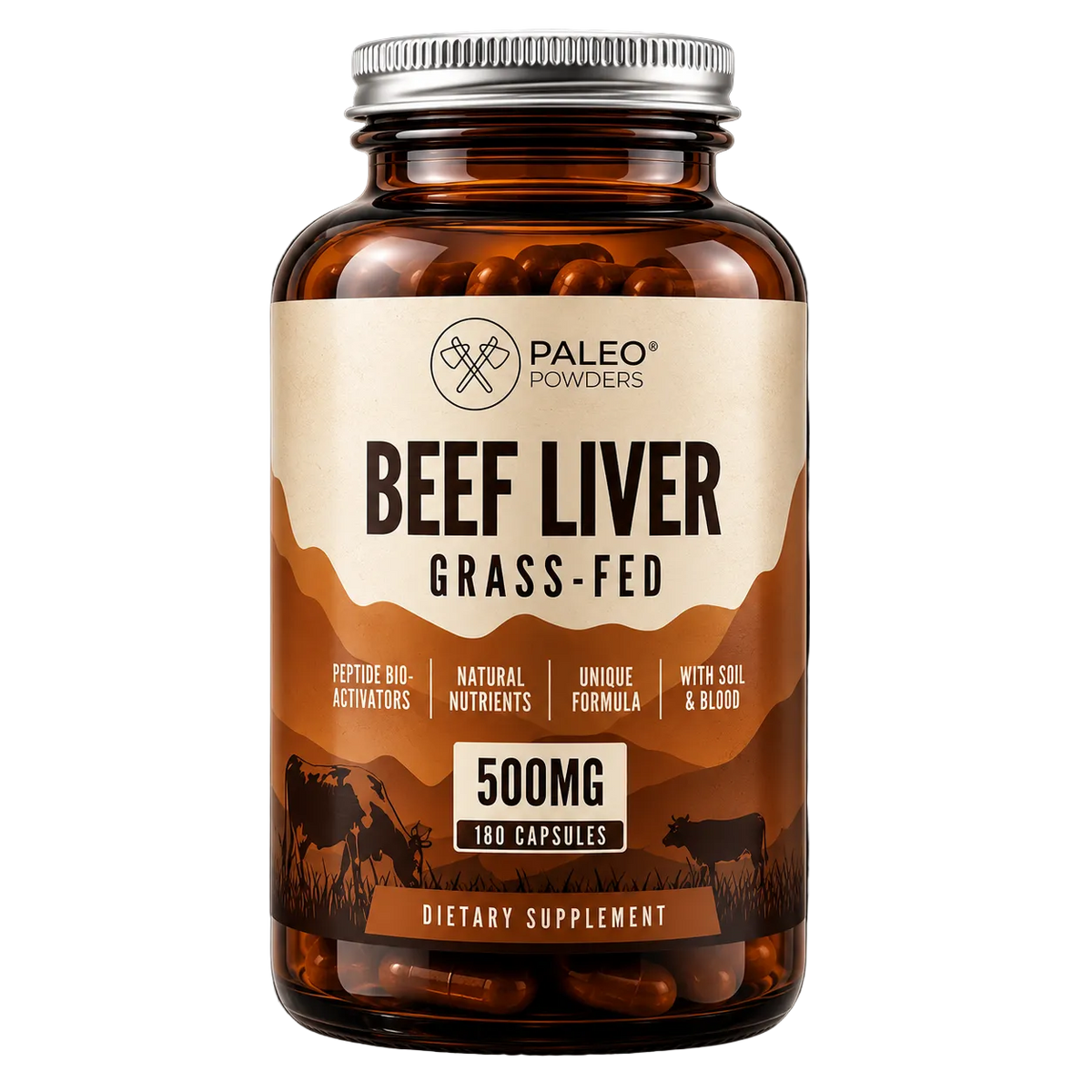
How to choose beef liver capsules: 7 things to look for
Freeze-dried or desiccated, defatted or not, origin and vitamin A: how to choose beef liver capsules that suit you.
Read more